Mauritius



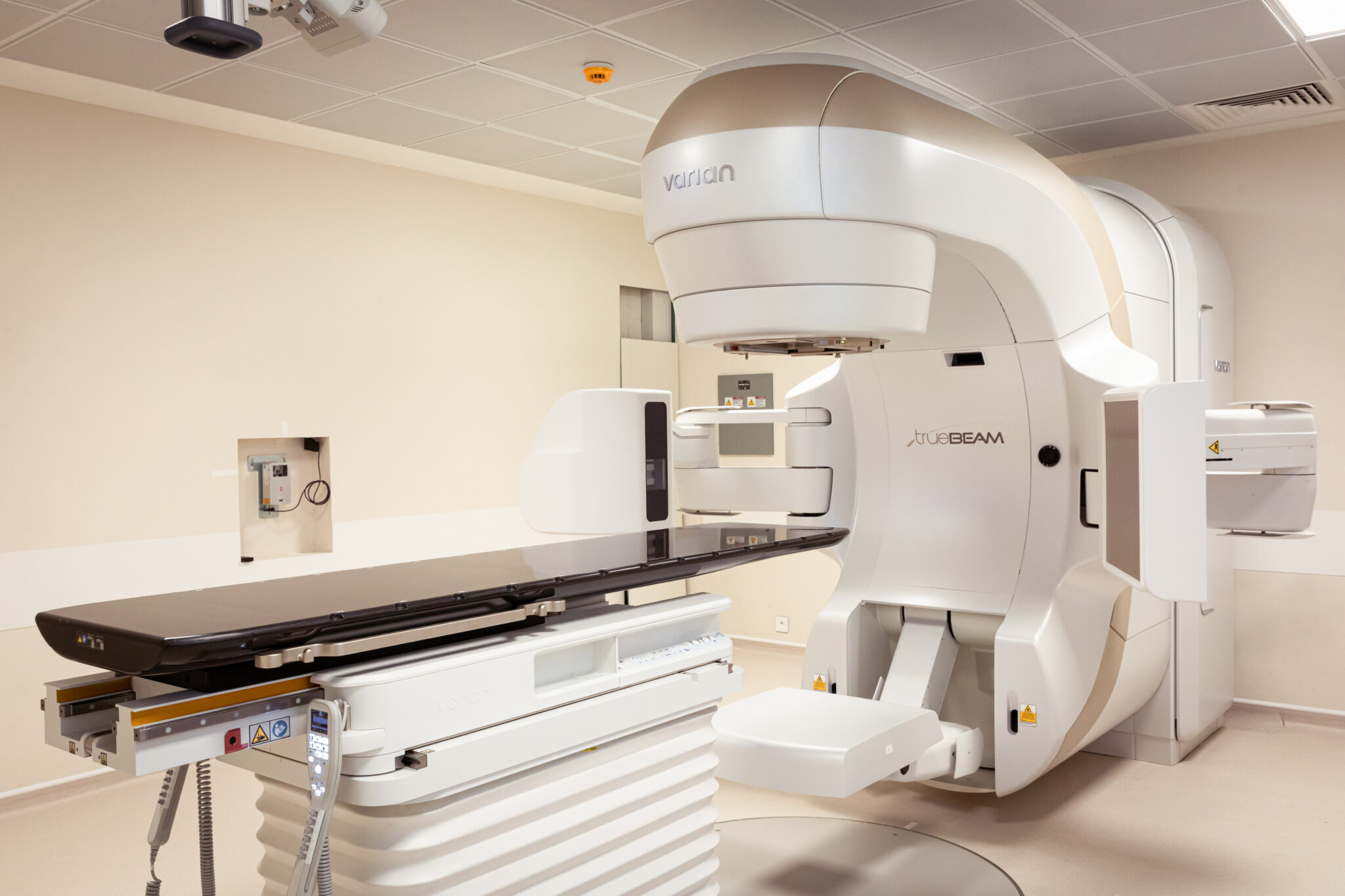
Truebeam:
What is TrueBeam technology?
TrueBeam technology is a sophisticated radiotherapy system designed for treating cancer with high precision and speed. This system can deliver powerful cancer treatments with pinpoint accuracy, making it possible to treat a wide range of cancers including lung, breast, prostate, head, and neck cancers, among others.
It is used to treat various cancers, including those that are hard to reach or inoperable, such as brain, head and neck, liver, lung, pancreatic, prostate, and spinal cancers.
Advantages of TrueBeam:
- The ability to shape the radiation beam to match the tumor’s 3-D shape through a Multileaf Collimator (MLC). The MLC has computer-controlled leaves that adjust the beam’s shape and size during treatment, targeting the tumor while sparing nearby healthy tissue.
- TrueBeam’s sophisticated motion management system and its ability to rotate around the patient to deliver radiation from nearly any angle enhance its effectiveness in treating tumors.
- The TrueBeam system represents a significant advancement in cancer treatment, offering high precision, flexibility, and speed. Its ability to integrate advanced imaging and motion management technologies enables the delivery of targeted treatments while minimizing side effects, providing a new level of care for cancer patients.
Radiotherapy:
Radiotherapy, also known as radiation therapy, is a type of cancer treatment that uses high doses of radiation to kill cancer cells and shrink tumors. It works by damaging the DNA of cancer cells, which stops them from dividing and growing. Radiotherapy can be used alone or with other treatments such as surgery and chemotherapy. Here’s an overview of the key aspects of radiotherapy services.
Radiation oncology:
Radiation oncology is a medical specialty focusing on ionizing radiation to treat cancer. Radiation oncologists are doctors who specialize in this type of therapy, using it to destroy cancer cells, reduce tumors, and control cancer symptoms. Here’s an overview of what radiation oncology involves, including its role in cancer care, types of treatments, and how it fits into the broader context of oncology.